|
Eager Space | Videos by Alpha | Videos by Date | All Video Text | Support | Community | About |
|---|

Welcome to eager space...
Recently, SpaceX announced that they had bought a big chunk of land on Louisana coast that will become a primary Starship launch site.
This is a great idea.
To understand why, we need to look at the existing SpaceX sites and their suitability for Starship launches.
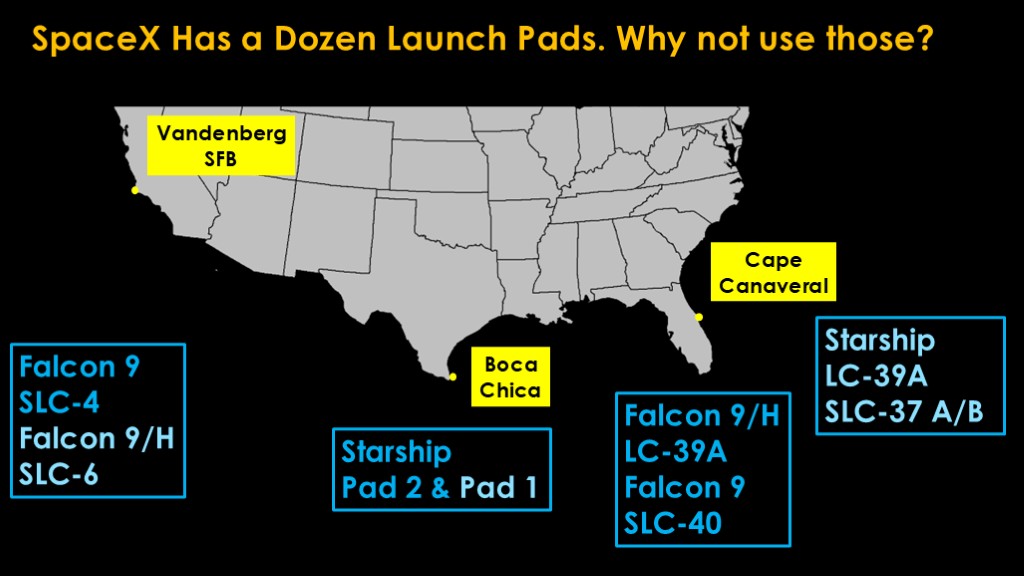
SpaceX launches out of three launch sites.
At cape Canaveral in Florida, they launch Falcon 9 and Falcon heavy from historic launch complex 39A in Kennedy Space Center and they launch Falcon 9 from space launch complex 40 in Cape Canaveral Space Force Station.
At Vandenberg space force base in California, they have space launch complex 4 East for Falcon 9 and they are renovating space launch complex 6 for Falcon 9 and Falcon Heavy.
At boca chica in Texas they are currently launching starship block 3 from pad 2 and are upgrading/rebuilding pad 1 to support block 3.
And they are building a Starship pad at LC-39A on kennedy space center and two pads at SLC-37 on cape Canaveral space force station.
That's 9 pads. Rocket lab has 4, and ULA used to have 4 but is now down to 2.
Why aren't the existing pads enough?
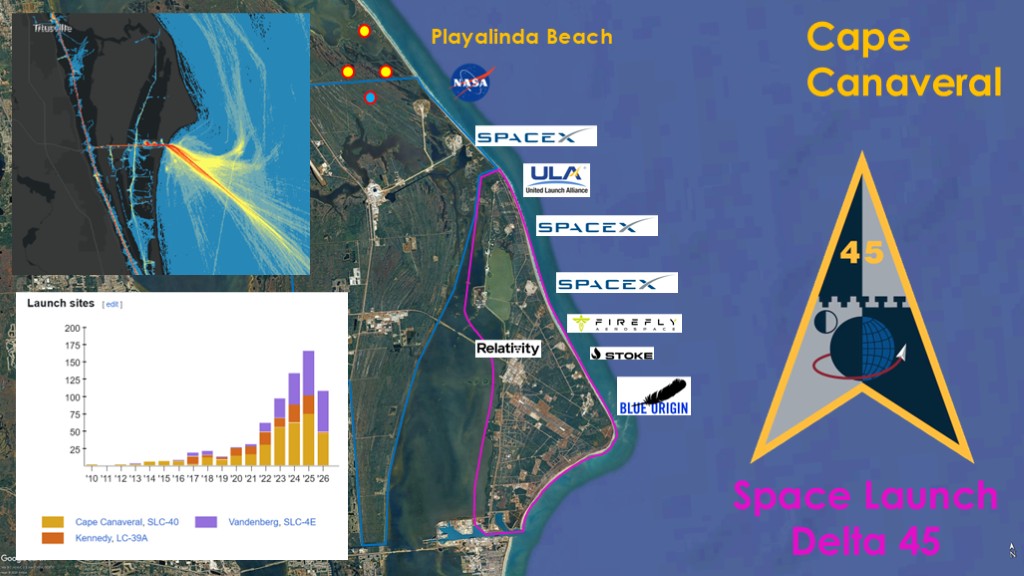
We'll start with Cape Canaveral.
At cape Canaveral space force station, there are pads for Atlas V and Vulcan, for Falcon 9, and for New Glenn.
We also have pads leased by firefly, relativity, and stoke. And we have the pad that SpaceX is converting for starship.
No real space for expansion, and even the current pads are tightly packed together. That hasn't been a huge problem for the rockets that currently fly there as they don't impact other users and - with the exception of Falcon 9 - they don't fly that often. But that new starship pad might be problematic if they want to launch all the time as every flight interrupts work at nearby pads and perhaps at the space force station itself.
Kennedy space center occupies a larger area and LC39 was intended to fly rockets bigger than the Saturn V, and it looks like a decent home for starship. But there are only two pads, and LC39B is allocated to NASA's SLS rocket.
NASA had plans in the 1960s to put an additional 3 pads to the north, very roughly in these locations. The problem is that these areas are highly sensitive wetlands and there is no current infrastructure. SpaceX wants to extract methane from natural gas and produce liquid oxygen at their launch site. Doing that would be very difficult at the northern sites.
They are also right next to playalinda beach, which draws more than a million visitors per year. Those pad locations aren't viable.
There was also a proposed launch complex 49 , but it has the same problems.
The reason the current pads are modified is that they have been in use for many years and the environmental impact of a slightly different use is small. The studies still have to be done, but they generally show that there is no significant impact.
Historically, there were 10-20 missions a year flying out of the cape, but with Starlink that ballooned to more than 100. SpaceX's starship aspirations are a higher flight rate than that. It has been a challenge for Space Launch Delta 45 group, the group that needs to manage all of the flights.
And port Canaveral hosts over 1000 cruise ship sailings per year.
The cape is a good place for low cadence launchers. It's not great for high cadence launchers. Too many people too close, too much going on.
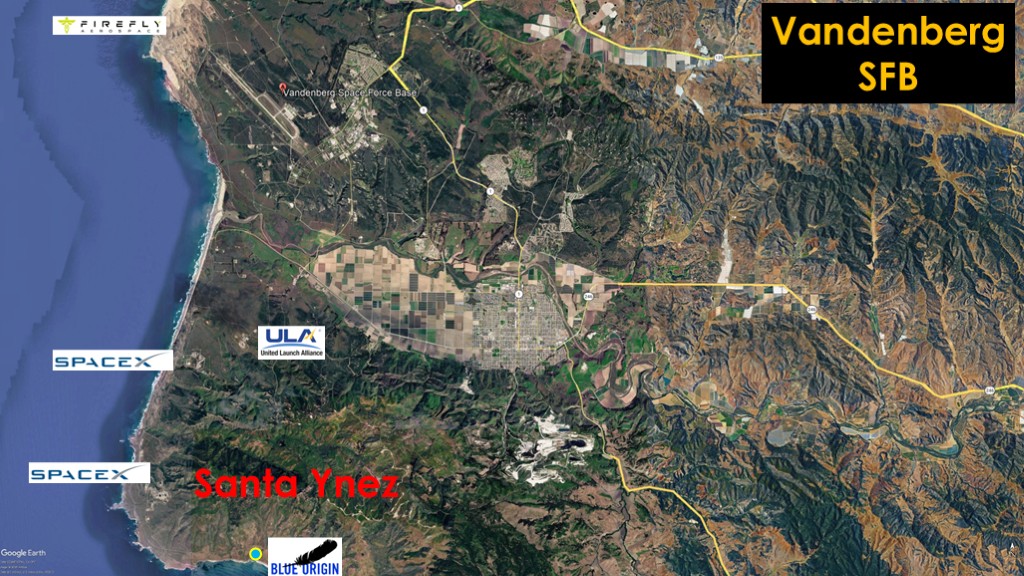
Vandenberg is a lot smaller. Firefly has a site up north at SLC-2. SpaceX has SLC-4 for Falcon 9, and they are working on adapting SLC-6 - the other Delta IV Heavy site - for Falcon 9 and Heavy.
ULA is modifying their SLC-3 site for Vulcan, and the brand new SLC-14 will host New Glenn.
Vandenberg is less crowded and there's more space, but most of the area that might be used is occupied by the Santa Ynez (e-nez) mountains. That's why it wasn't already in use.
When the Space Force made the SLC-14 location available for heavy or super-heavy launchers, Blue Origin and SpaceX were the obvious candidates. It's not clear, however, if SpaceX was truly interested in the site. If they wanted to launch Starship from Vandenberg, SLC-6 would make sense as a location rather than wanting a fully new site.
There's another issue with both the sites we've discussed...
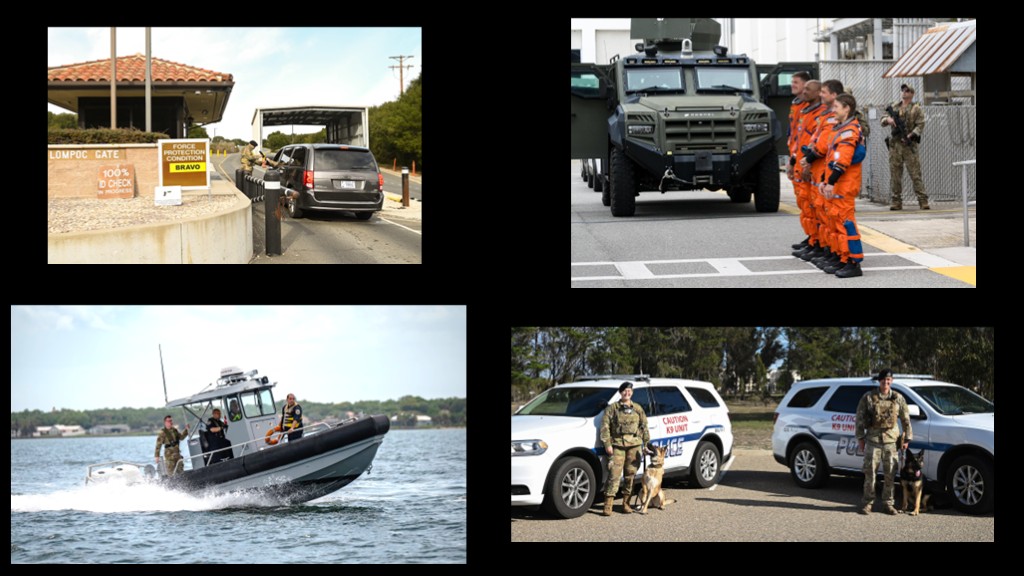
These are all high security areas, which means a requirement to meet a list of security requirements, including background checks and security clearances in some cases.
That adds complexity and cost.
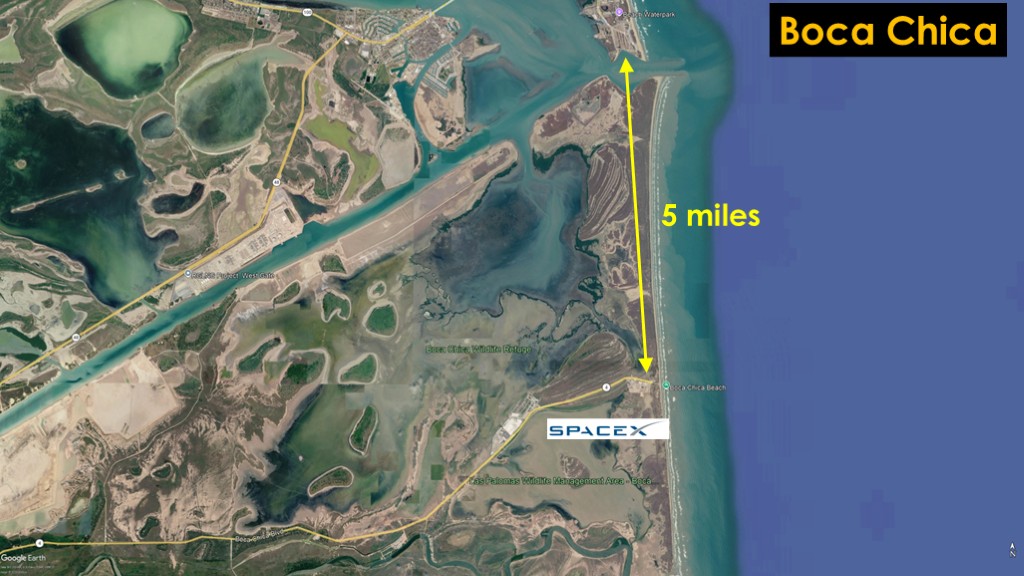
Which takes us to Boca Chica in Texas. Space started buying property there back in 2012, very early in the life of Falcon 9 and they accumulated property through 2017.
The original plan was to make this a launch site for Falcon 9 and Heavy, but then they needed a location for Starship and the site was repurposed.
There are a lot of advantages to this site.
SpaceX owns the factory and the launch sites and there is nobody else operating here, which gives them a lot more freedom.
They are close to the city of Brownsville but not too close - it's about 15 miles away.
There is a deepwater port right in their backyard
There is a liquified natural gas export facility being built in that port, which means SpaceX can build their own liquid methane facility.
They are unfortunately only about 5 miles from the vacation destination of South Padre Island, and that is close enough that launches are quite loud.
The public uses Boca Chica beach.
SpaceX is limited to 25 launches per year. Maybe they could get a higher limit but that is going to impact public use and the noise situation will get worse.
But there's the same problem as their other two sites...
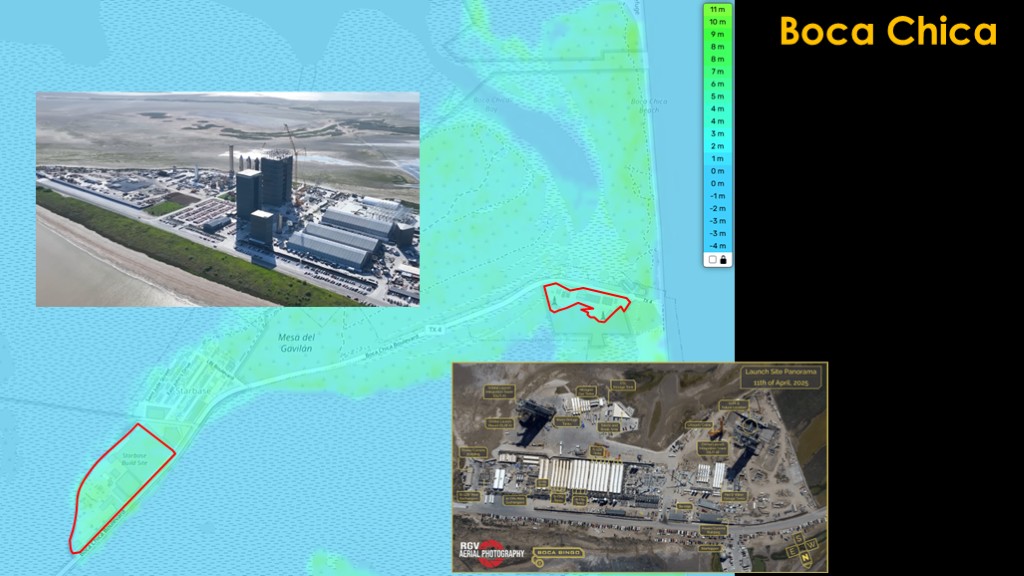
This is a topographical map of the starbase area.
The whole area ranges in elevation from 3 feet to perhaps 30 feet. The locations that starbase factory and the launch site occupy are built up a bit higher, but they are still subject to flooding during storms. They are pretty much maxed out in the land the available land.
The land they are on was built up in the 1960s. You can't do that to wetlands any more.
SpaceX runs into the same "not enough room" problem they have in Florida.
What would their idea starship launch site look like?
Welcome to Louisiana
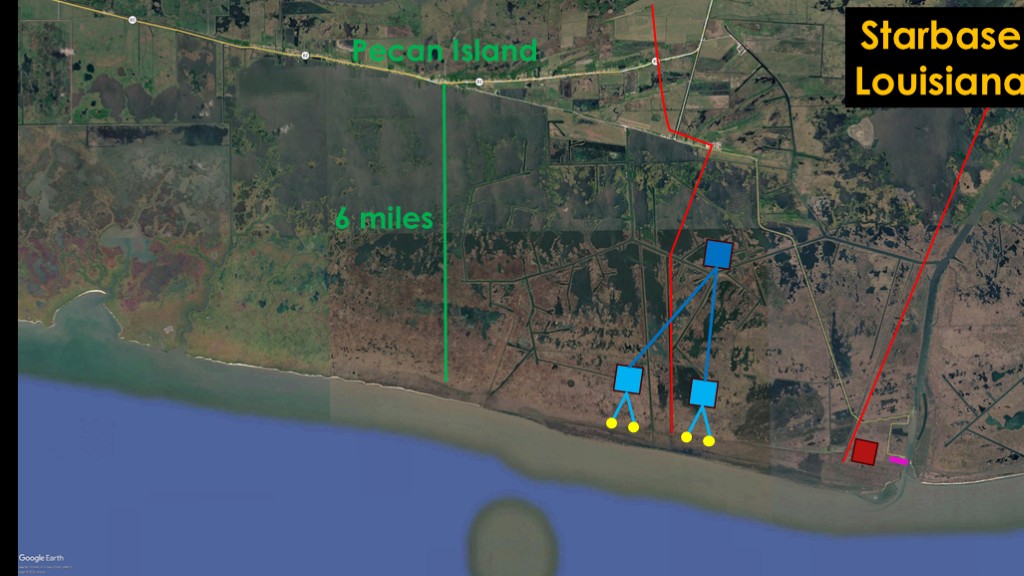
This is the land that they bought. It is low, but it's not quite as low as the boca chica site.
At the east end of the property, there is a canal that leads into the interior. It very conveniently already has a small dock that can be used to unload onto the SpaceX property.
Next to that they will likely build something like the megabay they have at Starbase Texas.
Then they will build a pad complex. It has two launch pads close to the shoreline. These pads are fed by a propellant farm perhaps half a mile from the pads, and the propellant farm is fed by a propellant production facility around 3 miles from the pad.
Those facilities take natural gas and create liquid methane, and they will chill air to create liquid oxygen and liquid nitrogen. They will obviously need natural gas to create the liquid methane, and there are not one but two pipelines already on the property.
I didn't find any close power lines, and I expect them to build a cogeneration plant that will burn the leftover propane and ethane from the liquid methane plant and additional natural gas to create the power that they will use to run the process. I also expect that they will use solar to provide power.
If two pads aren't enough, they will just replicate the same design going down the coast.
This site has lots of space and there is room for expansion. What about neighbors?
The closest population center is Pecan Island to the Northwest. It is roughly 6 miles from the west end of the SpaceX launch pad locations and has a reported population of about 300 people. That's more than double the distance from launch complex 39A to the vehicle assembly building at Kennedy Space Center and roughly 3 times the distance from SLC-37 on cape Canaveral space force station and the buildings of the space force station.
The next closest settlement is at about 12 miles away. So, not a lot of neighbors.
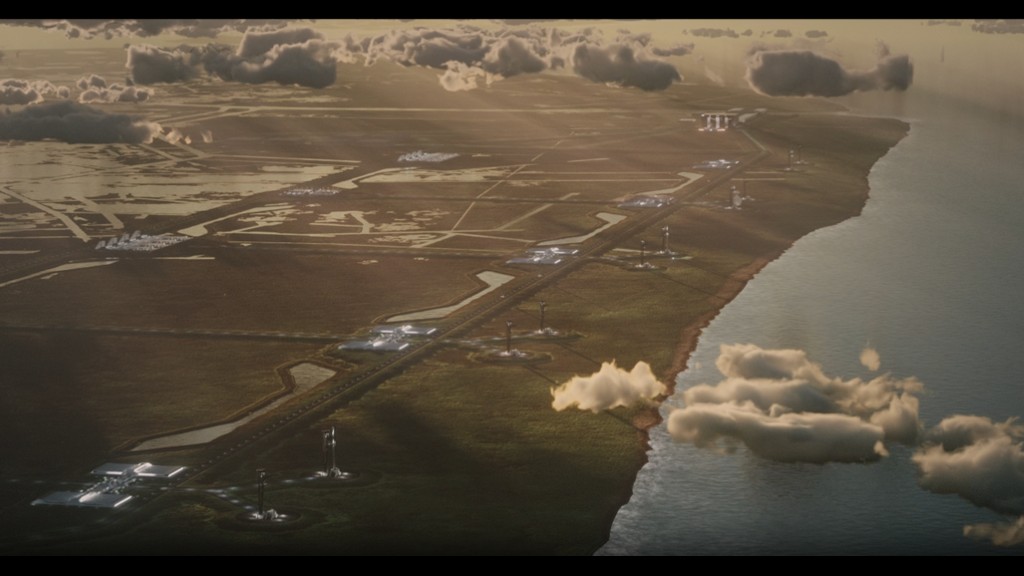
This is a SpaceX render of what the site might look like with 10 pads.
All of this seems great compared to the restrictions at the existing sites. But does it make sense from an orbital mechanics perspective? Aren't the best launch sites able to launch directly east?
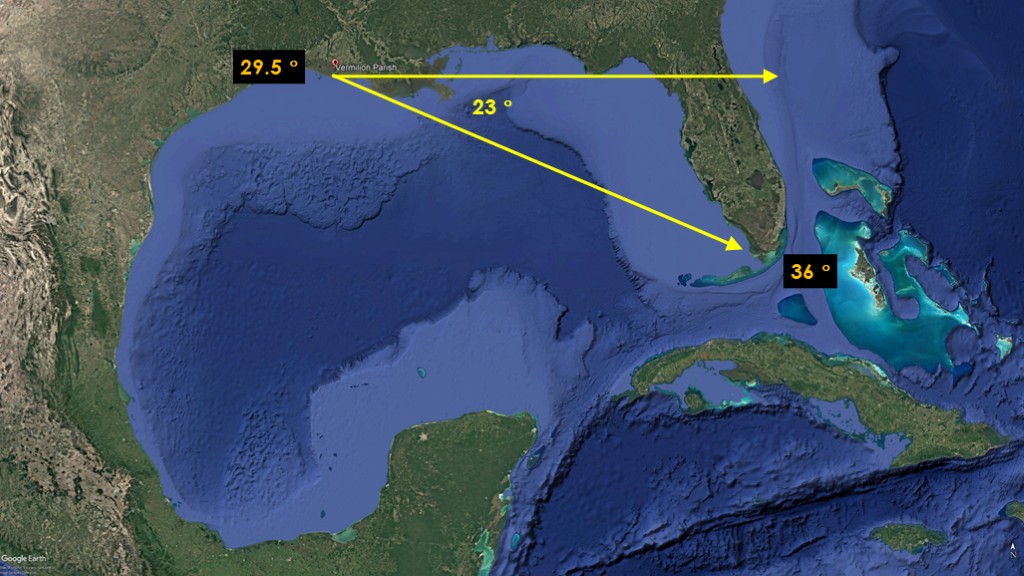
To explore that, we need to look at a wider view of the Gulf of Whatever.
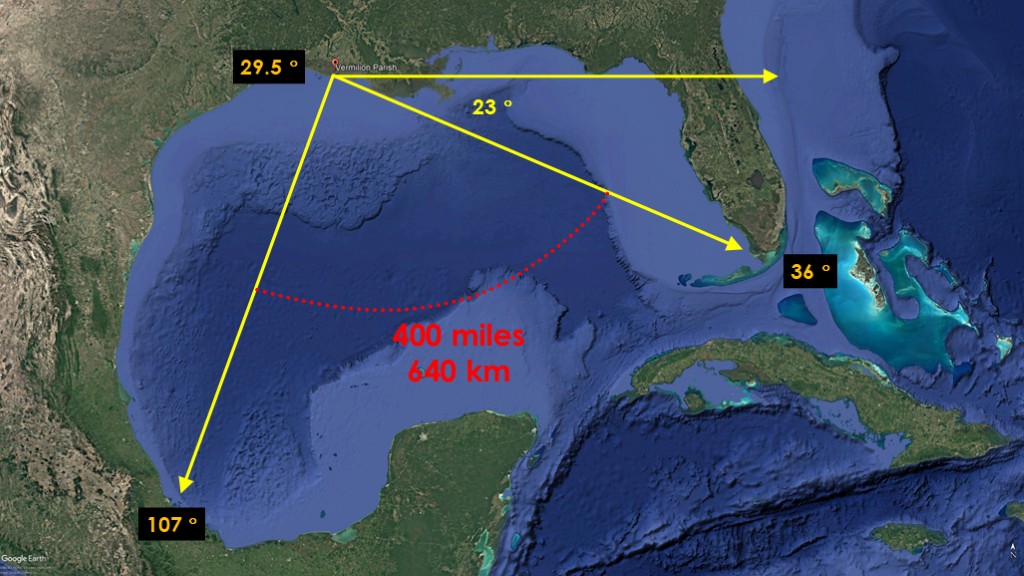
Starbase Louisiana is in Vermilion Parish, and that's at about 29.5 degrees north. That means that if we launch directly to the east, our minimum orbital inclination would be 29.5 degrees. But that means that we are launching over land, land with people on it. That is generally frowned upon.
To miss Florida, you need to launch to the south by about 23 degrees, and that will lead to an inclination of about 36 degrees.
Isn't that a show-stopper?
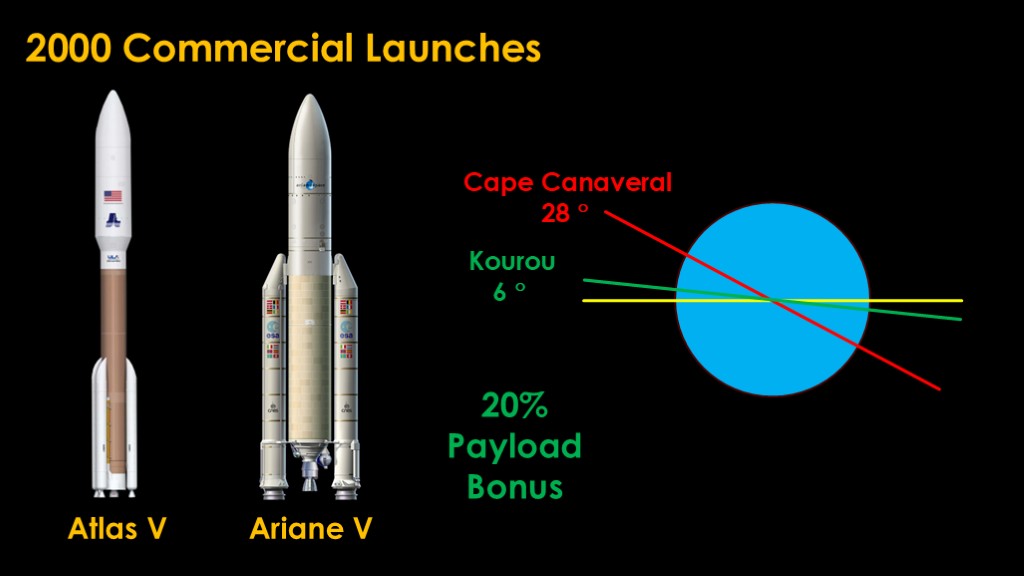
In the old days, the answer is a firm yes. In 2000, both Atlas V and Ariane V launched commercial geostationary communications satellites to GTO orbits because those satellites pretty much the entire commercial launch market and the government also liked to launch to those orbits.
Those satellites will end up in an orbit directly over the equator, but they are launched initially into the inclination of their launch site. Ariane V launches from Kourou in French Guiana which is only 6 degrees north of the equator.
Atlas V launches from Cape Canaveral at 28 degrees north of the equator.
Ariane V spends much less energy changing its inclination to zero degrees than Atlas V does purely because of the difference in launch site latitudes. That difference translates to roughly a 20% payload bonus for Ariane V - an Ariane V launched from Kourou could carry 20% more payload to GTO than one launched from Cape Canaveral.
Ariane V was a rocket that was custom designed to launch comsats and that 20% bonus certainly helped Ariane dominated the market.
In 2000, Atlas V did 3 commercial GTO payloads, and Ariane V did 17.
If you need to launch GTO payloads, Louisiana is a pretty poor choice - you are launching to 36 degrees as that's quite a bit worse than launching from Cape Canaveral.
But the world has changed since then.
Since SpaceX plans to launch starship from the cape, they can do any GTO missions from there.
What SpaceX needs is a site that is good to launch a lot of starlink satellites.
The current starlink satellites have inclinations that range from 43 degrees to 97.6 degrees. And here are the launch directions from Louisiana that give them that range of inclinations. They can launch all starlink satellites from this site - they don't need the cape Canaveral plus Vandenberg to do it.
And the majority of the planned data center satellites are in that inclincation range, though some are at around 30 degrees. Those might fly from the cape, or they might get approval to fly over southern florida.
But what about the overflights?
This dotted red line is roughly 400 miles away from the launch pad, which is the longest downrange landing we might ever expect for a Falcon 9.
Starship stages earlier than Falcon 9, so super heavy will never reach that line. There is therefore no booster failure mode that drops debris over land for any of the inclinations in this range.
And there's another big benefit
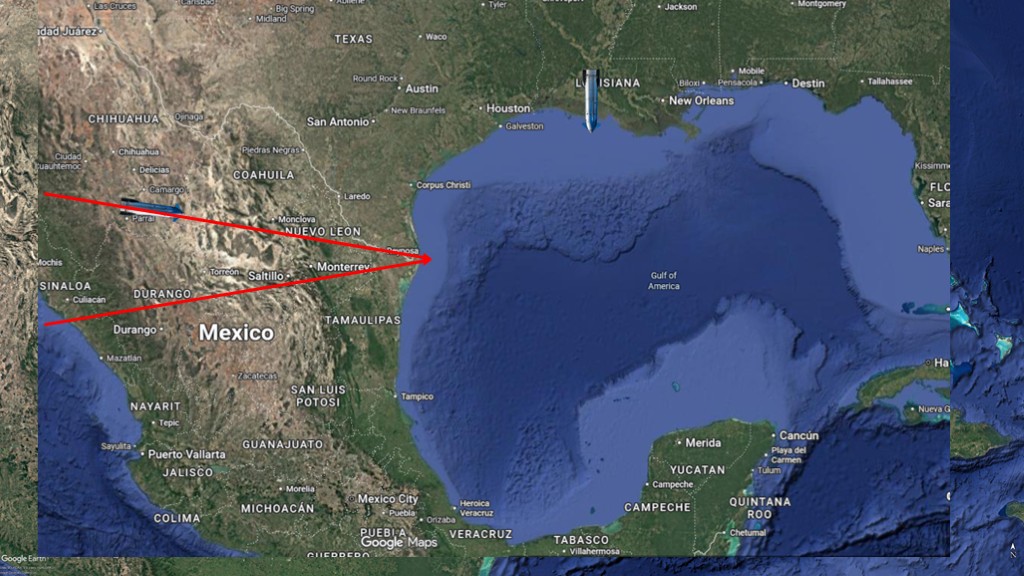
Starship launches from Boca Chica in Texas currently fly between florida and cuba, and that means when starship coming back to land, it has two possible ground paths. The bottom one happens roughly 12 hours after launch and the upper one happens roughly 24 hours after launch. Both of those paths fly over populated areas though the trajectory will initially target a point off the shore rather than the tower.
Those overland flights make people a little nervous.
But if you are launching from Lousiana headed towards the south - to a roughly polar orbit - the ground track stays mostly vertical, and 12 hours later you get a landing track right over the gulf of whatever.
That's for the polar inclinations but it's mostly applicable to all the other inclinations.
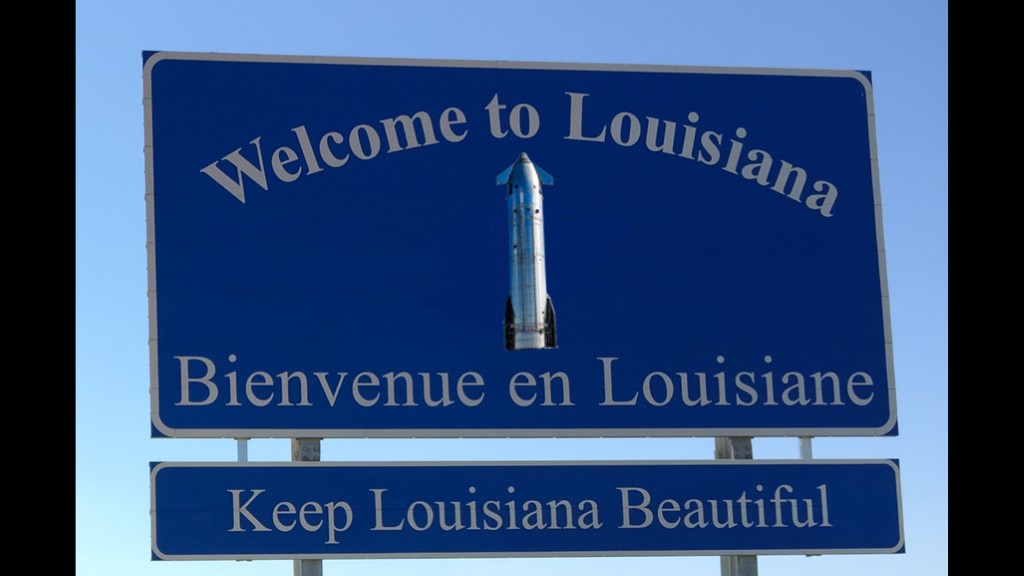
And that's why this is such a good site for the future of SpaceX. It meets nearly all of their requirements and it's in a state that really wants the site.
Today's song is Born on the Bayou by Credence Clearwater Revival, off their 1969 album Bayou Country.
https://www.youtube.com/watch?v=fcTQCNntGEs